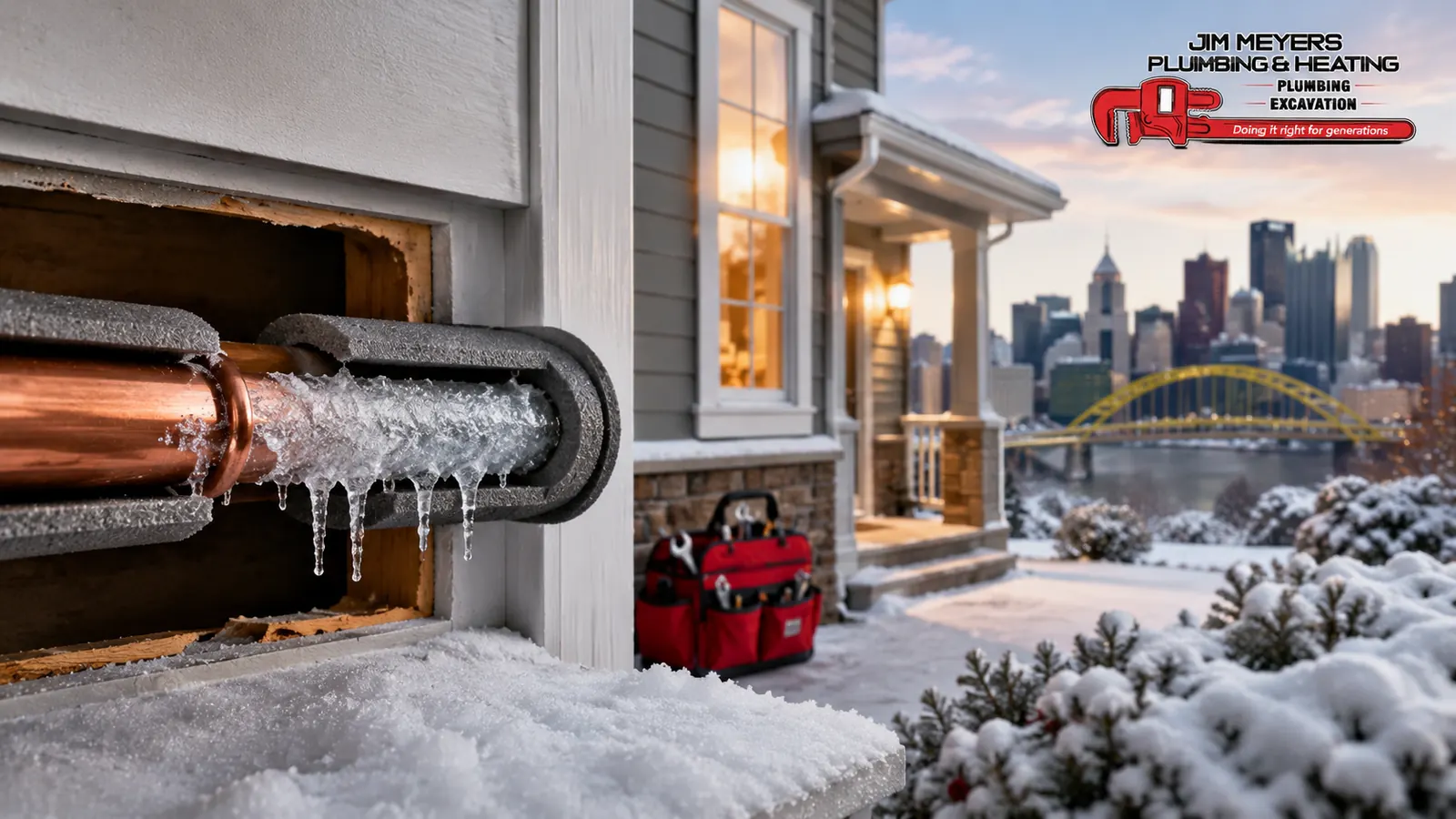
Why Frozen Pipes Are a Serious Threat in Western PA
Every winter, Pittsburgh-area plumbers respond to hundreds of calls from homeowners dealing with burst pipes. When water freezes inside a pipe, it expands with tremendous force — up to 2,000 pounds per square inch — easily splitting copper, PVC, and even cast iron pipes. The damage often is not apparent until the ice thaws and water begins flooding the home.
Homes in Oakdale, Carnegie, Bridgeville, and surrounding communities are especially vulnerable because many were built before modern insulation standards. Exposed pipes in basements, crawl spaces, garages, and exterior walls are the most common failure points.
Insulate Exposed Pipes
The most effective prevention is insulating every exposed pipe in unheated areas. Foam pipe insulation is inexpensive, available at any hardware store, and easy to install. Focus on pipes in the basement along exterior walls, in the crawl space, in the garage, and near exterior hose bibs.
For pipes that are particularly vulnerable — such as those running through exterior walls or uninsulated crawl spaces — consider adding thermostatically controlled heat tape or heat cable. These products turn on automatically when the temperature drops and can prevent freezing even in extreme cold snaps.

Keep the Heat On
If you are leaving your home for a winter vacation, never set the thermostat below 55°F. Pipes running through interior walls depend on the ambient heat of your home to stay above freezing. Even a weekend trip during a cold snap can result in frozen pipes if the heat is turned off or set too low.
Open cabinet doors under kitchen and bathroom sinks to allow warm air to circulate around pipes that run through exterior walls. This simple step makes a measurable difference during extreme cold.
Let Faucets Drip During Extreme Cold
When the forecast calls for temperatures below 20°F, let the faucets on exterior walls drip slightly overnight. Moving water is much harder to freeze than standing water. You do not need a heavy flow — a slow, steady drip is enough to prevent ice from forming in the pipe.
Open both the hot and cold lines to a slow drip. The small increase in your water bill is insignificant compared to the cost of repairing a burst pipe and the resulting water damage.
Disconnect and Drain Outdoor Hose Bibs
Before the first hard freeze, disconnect all garden hoses from exterior faucets. A connected hose traps water in the hose bib, which freezes and splits the fixture — or worse, the pipe behind the wall. After disconnecting the hose, open the hose bib to drain any remaining water.
If your home has frost-free hose bibs (also called sillcocks), they are designed to drain automatically when the hose is disconnected. But they only work if the hose is actually removed. Leaving a hose connected defeats the frost-free design.
What to Do If a Pipe Freezes
If you turn on a faucet and only a trickle comes out, a pipe may be frozen. Do not use a blowtorch, propane heater, or any open flame to thaw a pipe. Instead, apply gentle heat with a hair dryer, heat lamp, or warm towels. Start from the faucet end and work toward the frozen section to allow water to flow as the ice melts.
If you cannot locate the frozen section, or if you discover a pipe has already burst, shut off the main water valve immediately and call Jim Meyers Plumbing at (412) 787-7805. We provide responsive plumbing service throughout Oakdale, Moon Township, Robinson Township, and the entire Pittsburgh area.